Digital Marketing for Kitchen Cabinet Brands That Turns Ad Spend Into Profitable Growth
A cabinet order is a $3,000 decision that takes six to ten weeks, starts with a free sample, and ships on a freight truck. Most agencies have never run anything like it.
We’ve spent 10+ years working inside the kitchen cabinet industry, scaling top US cabinet eCommerce brands — so we know your margins, your sample-to-order math, and where that long cycle tends to fall apart. That’s what effective digital marketing for kitchen cabinets actually looks like.
We've driven growth for
Leading
US cabinet eCommerce brands
Top-5
national RTA cabinet retailer among them
All 50
states — semi-custom brands shipping to every one
Who's behind your campaigns
A Digital Marketing Agency for Kitchen Cabinets, Built by an Industry Operator
I’m Bhavy Shah, and our team has spent the last ten years working with kitchen cabinet brands.
None of what’s on this page shows up in a generalist playbook. I’ve used it to scale RTA and semi-custom cabinet eCommerce brands past seven figures, and it’s how every campaign here gets built.
What 10+ years in the industry taught us
-
Lesson 01
The biggest leak in most cabinet funnels isn't the ad account at all — it's the sample that gets mailed out and then forgotten.
-
Lesson 02
"Will it fit" kills more product pages than price does.
-
Lesson 03
A dealer campaign built like a direct-to-consumer campaign quietly wastes both budgets — the kind of thing you only notice after you've done it once.
The category we live in
The Product We’ve Spent a Decade Marketing
RTA flat-pack to semi-custom, painted shaker to walnut slab — door styles, finishes and price points change the campaign. The six-to-ten-week decision behind them doesn’t.
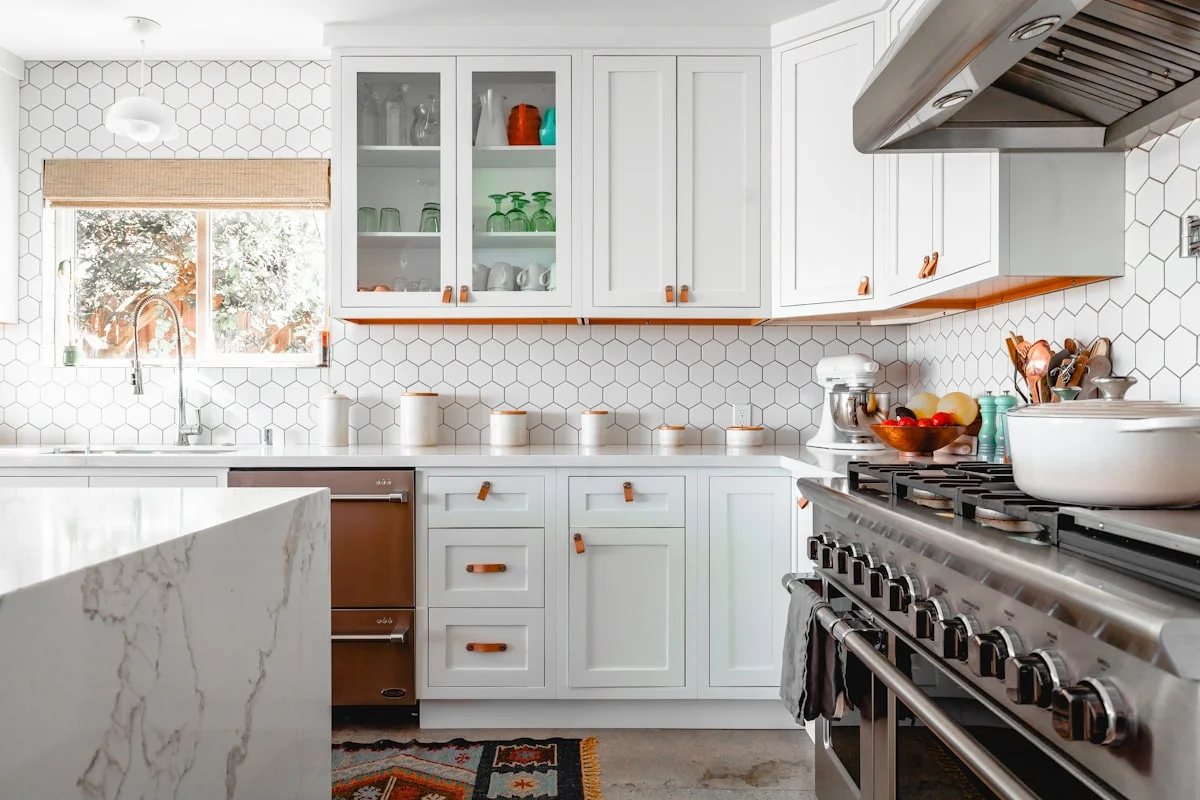
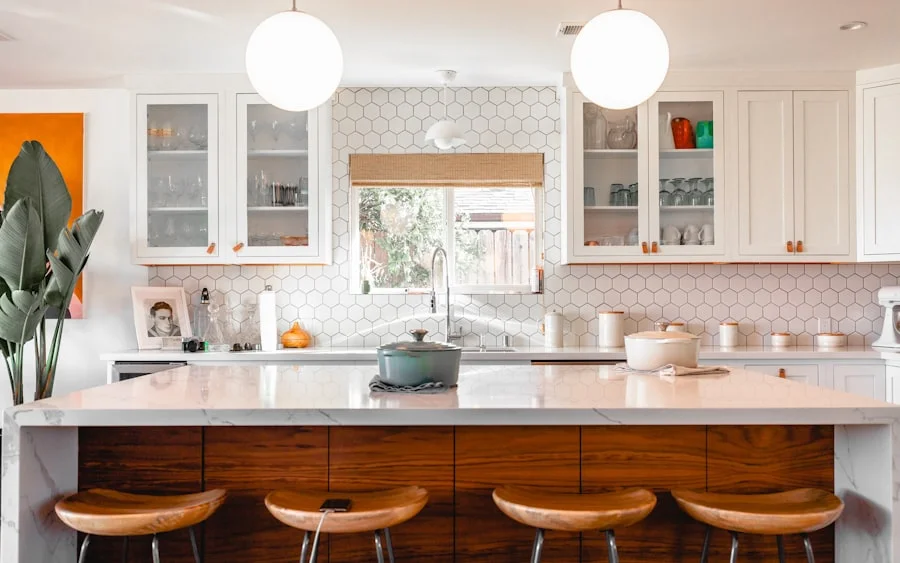
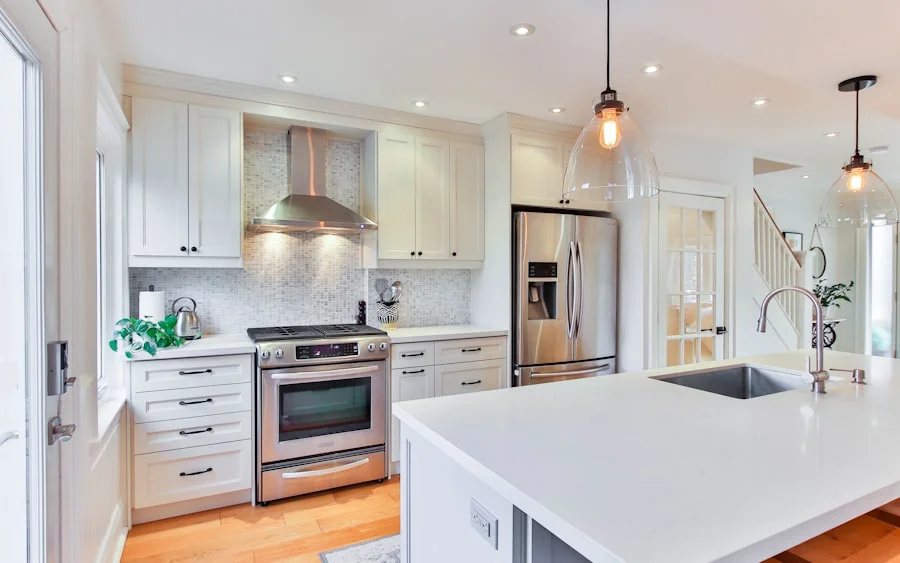
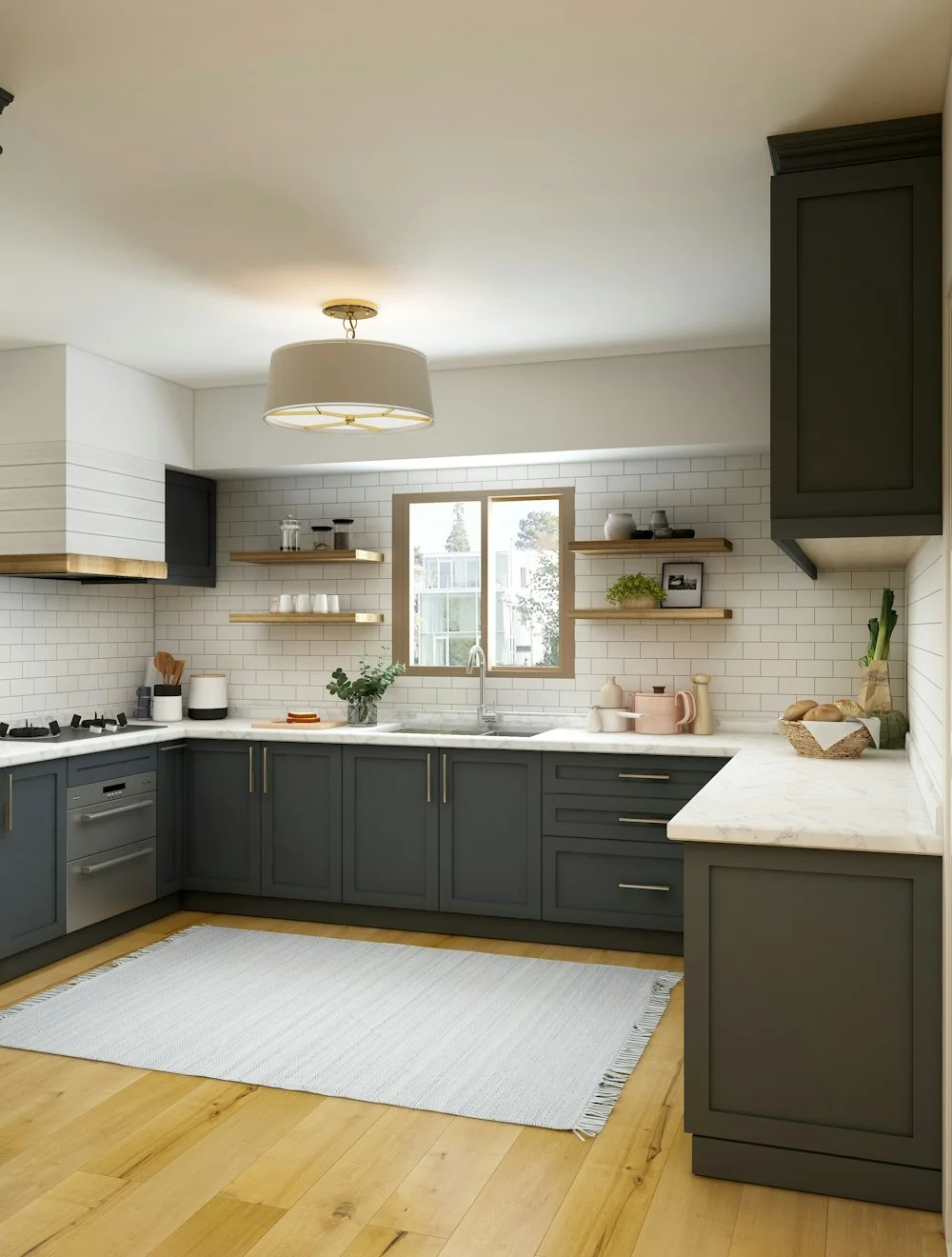
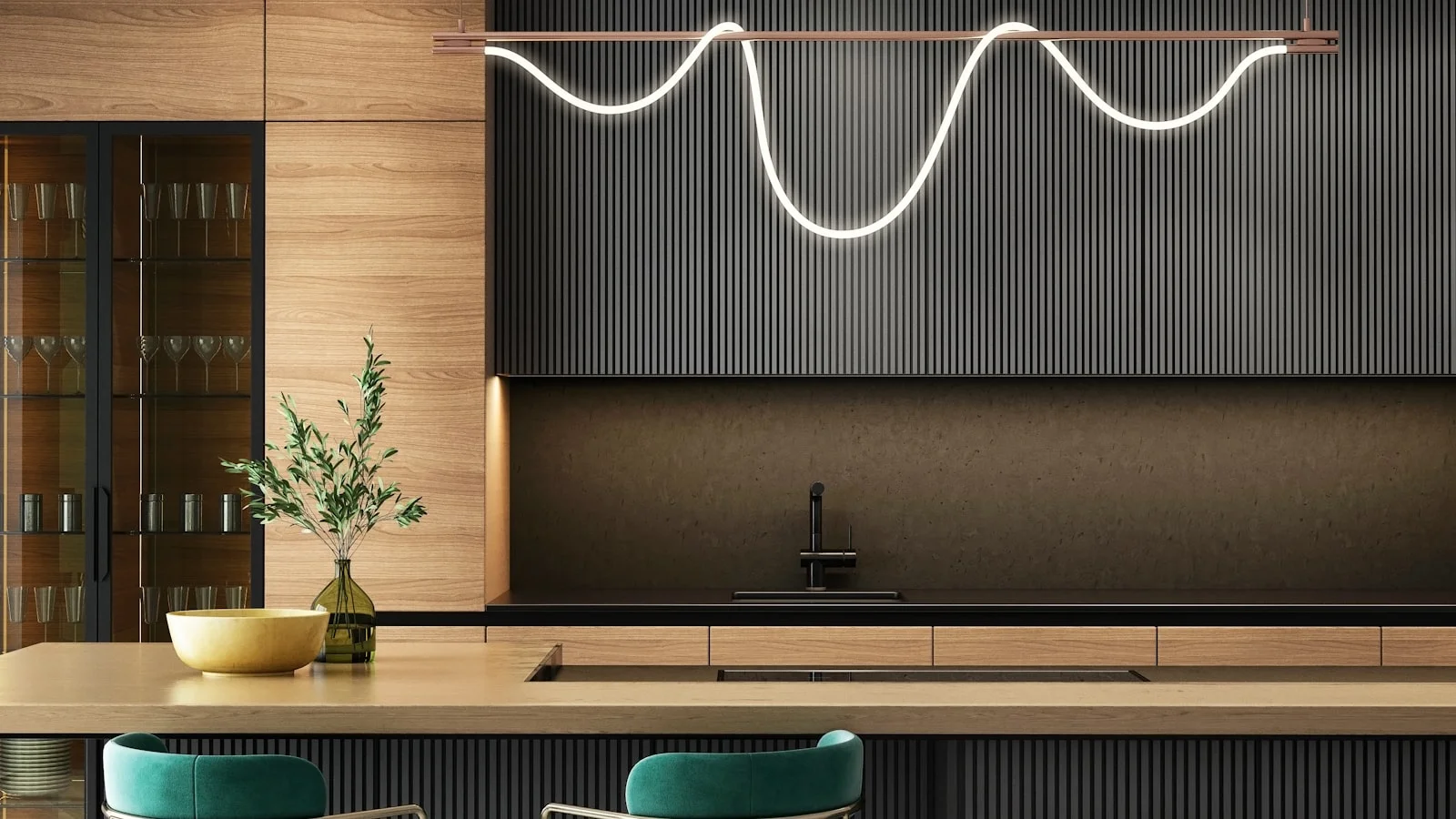
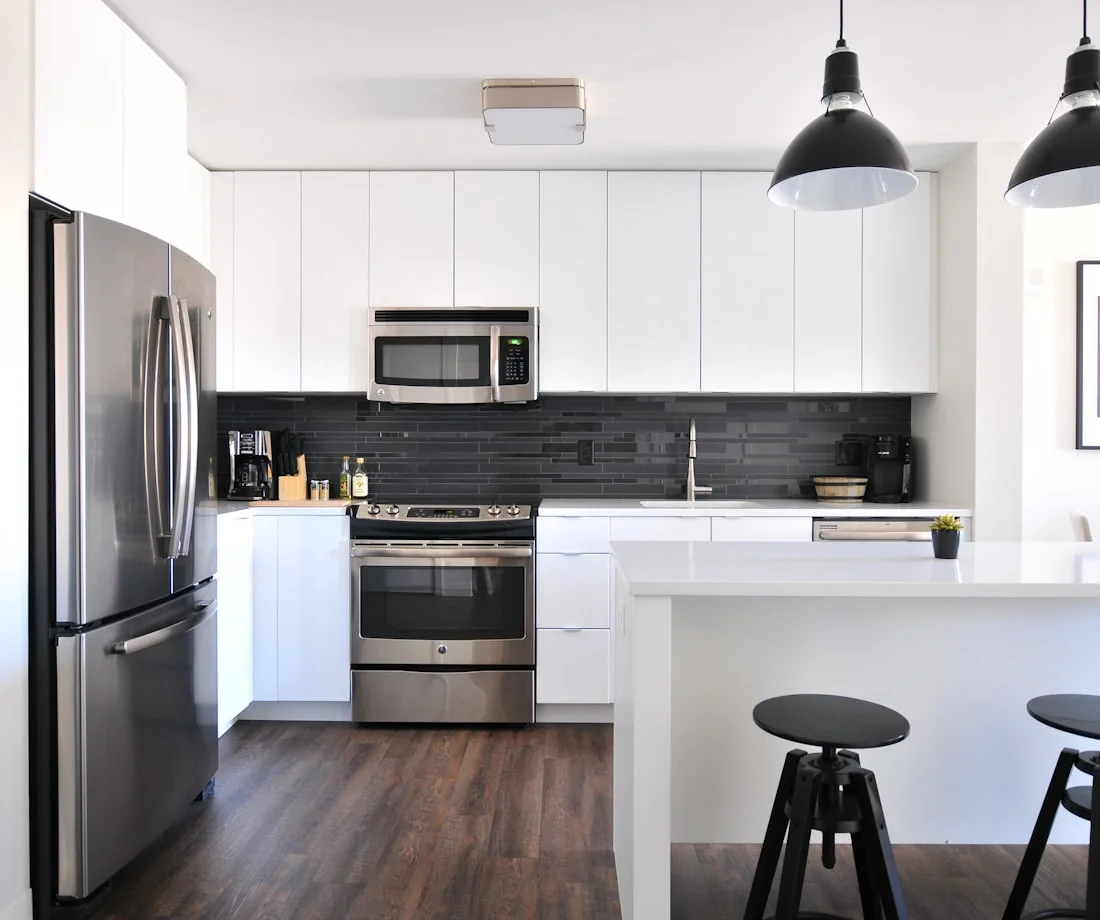
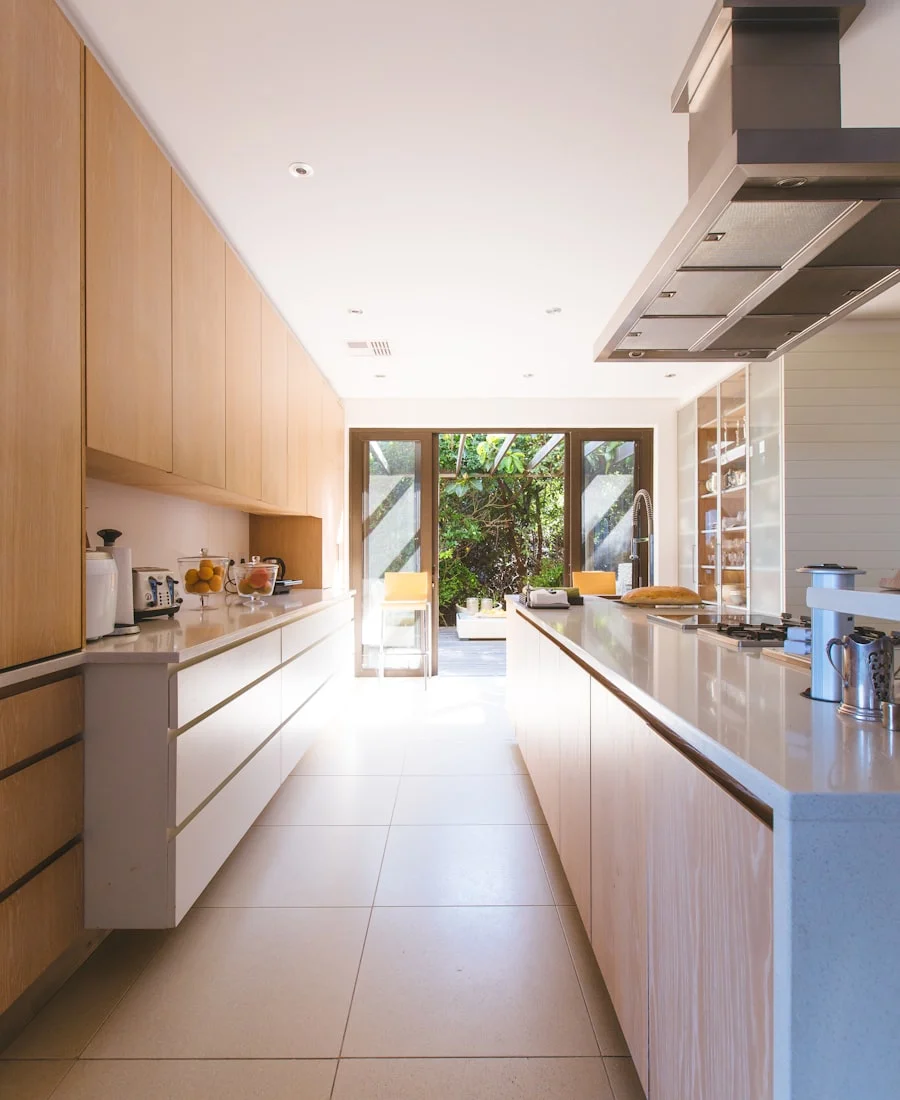
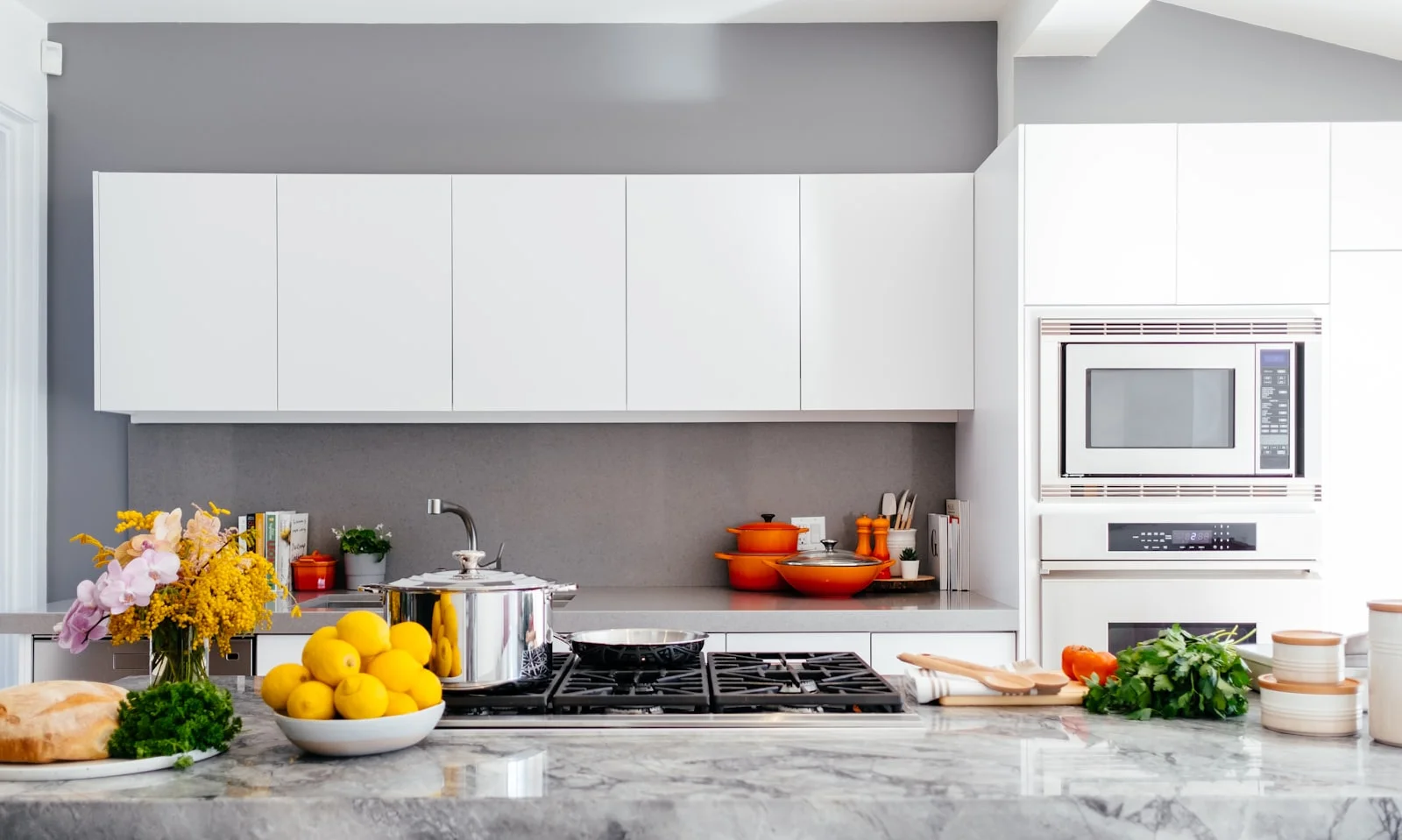
Representative kitchens, not client installs — the styles cabinet eCommerce catalogs are built on.
Sound familiar?
The Cabinet-Brand Problems Generic Agencies Can't See
-
Your PMax budget is funding people who will never buy a cabinet
"How to paint oak cabinets." "Cabinet refacing DIY." These convert into clicks and never into orders. Without a cabinet-specific negative list, you're teaching the algorithm that renters and DIYers are your customers.
-
Samples go out. Orders don't come back.
A sample request is the highest-intent action on your site, and for most cabinet brands it's followed by silence. No nurture, no design consult offer, no reason to return in week four. The sample cost gets written off as marketing spend when it should be the start of a conversion flow.
-
Freight and "will it fit" are killing your product page
Nobody spends thousands on cabinets they're not certain will fit, arrive undamaged, and carry no surprise charge at checkout. Most cabinet product pages answer none of that, so the buyer leaves to "measure again" and never returns.
-
Blended ROAS looks healthy while contribution margin bleeds out
Freight, samples, free kitchen design, damage replacements, discount codes, and your own marketing overhead all sit outside the ROAS your platform reports. Most cabinet brands are scaling campaigns that look profitable on the dashboard and lose money per order.
-
Your reports measure activity, not money
Clicks, impressions, CTR, sessions. All real numbers, none of which tell you whether last month made money. If your agency can't tie spend to free samples, full door samples, free kitchen design, freight, AOV, margin, and repeat revenue, they're reporting their own effort rather than your outcome.
-
Tracking broke after the privacy changes, and nobody rebuilt it
When conversion data stops flowing back cleanly, the algorithm optimizes toward whoever it can still see. On a long cycle, that means the wrong buyers — and the dashboard still looks fine while it happens.
-
You're being run like a Shopify apparel store
That playbook assumes an impulse buy, a low price point, and a same-week decision. Applied to a cabinet eCommerce brand with a ten-week cycle and a freight truck at the end of it, it doesn't just underperform. It optimizes for the wrong thing entirely.
If two or more of these hit home, the problem isn't your budget. It's that nobody running your performance marketing has operated a cabinet brand.
The playbook problem
Why the Wrong Marketing Agency for Cabinets Wastes Your Ad Budget
Most agencies aren't bad at their job. They're just running a playbook built for a different business.
The cloned playbook problem
Apparel and supplement funnels are designed around a decision someone makes in forty minutes. Cabinets take six to ten weeks and involve a spouse, a contractor, and usually a sample sitting on a kitchen counter for two weeks. Every assumption underneath that fast funnel — the attribution window, the retargeting cadence, the creative rotation — is calibrated wrong for your buyer.Calibrated for a forty-minute buyer, sold to a ten-week one.
"Cabinet marketing" usually means showroom leads
Search the term and most of the agencies you'll find do local lead-gen for showrooms: form fills, service area pages, Google Business Profile work. Useful for a regional dealer — close to useless if you're running a national Shopping feed, a catalog with thousands of SKUs across door styles and finishes, and a sample-to-order retention engine.Built for walk-ins, not a national Shopping feed.
No negative keyword depth means guaranteed waste
We run a cabinet negative list of 200+ terms from day one, built from years of watching where cabinet budgets actually leak. A generic agency starts with a generic list and learns your waste on your money — usually over two or three quarters.200+ cabinet negatives applied before the first dollar.
Form fills and ROAS screenshots aren't orders
A dashboard can show a 6x return while your contribution margin sits near zero once freight and samples are counted. We optimize to margin, which sometimes means turning off a campaign that looks like a winner. That conversation is uncomfortable, and it's the whole job.Optimized to margin, even when the dashboard disagrees.
The sequence
What Performance Marketing Looks Like for a Cabinet Brand at Scale
Performance marketing for a cabinet brand isn’t a channel mix; it’s a sequence that respects how long the decision takes. Google Search and Shopping catch people already comparing door styles and wood species. PMax and Meta catalog ads keep your product in front of them through the weeks where they’re measuring, arguing, and looking at competitors. SEO earns the buying guides and cost pages they read at the start. CRO makes sure the product page answers freight and fit before they bounce. Retention picks up everyone who ordered a sample and hasn’t come back yet. Analytics ties all of it to margin instead of clicks.
The funnel, in one line
- High-intent search or social
- Collection & product page
- Sample order or add-to-cart
- Email & SMS nurture
- Cabinet order
- Repeat project or referral
Most agencies run the first two steps well and abandon the rest. The money is in the rest.
What we do
Our Digital Marketing Services for Kitchen Cabinet Businesses
Each lever connects to a number you already track: cost per sample, sample-to-order rate, AOV, contribution margin per order, and repeat purchase rate.
Not sure where your funnel leaks?
The audit tears down your account, feed, funnel, and tracking — and tells you which of these six moves the needle first.
Book a Free Growth AuditPaid Ads for Cabinet Retailers — Google Search, Shopping & PMax
Paid is where cabinet budgets leak fastest and recover fastest.
We rebuild the platform around how your buyer actually shops, then run it to margin.
- High-intent Search segmented by cabinet type — RTA, semi-custom, assembled — and by style, so budget follows purchase intent rather than curiosity.
- Shopping feed built with proper cabinet attributes: door style, wood species, finish, construction.
- PMax with brand exclusions and a 200+ term cabinet negative keyword list applied from day one.
- Dedicated sample-order campaigns measured on sample-to-order rate, not cost per sample.
- Remarketing tuned to a 60- to 90-day window, because a 30-day window quits before your buyer decides.
Budget follows purchase intent, not curiosity.
Meta Ads for Cabinet Businesses
Meta keeps you present through the weeks where cabinet buyers go quiet.
Creative and sequencing built for a considered purchase, not an impulse one.
- Advantage+ Shopping plus catalog and dynamic product ads.
- Real project photography and before-and-after transformations — never stock images or renders.
- UGC from designers and contractors, which outperforms polished brand creative on considered purchases.
- A proper prospecting → sample → order retargeting sequence rather than one flat retargeting audience.
A sequence, not one flat retargeting audience.
SEO for Cabinet Businesses
Search is where cabinet buyers start — usually months before they're ready to order.
Paid captures them at the end of that window. SEO captures them at the beginning and keeps working after you stop spending.
- Collection and category pages built for buy-intent terms by style, wood, and finish.
- Content structured to get cited in AI search answers — Google AI Overviews, ChatGPT, Perplexity — where a growing share of cabinet research now happens.
- Buying guides and cost content that capture early-stage shoppers and feed them into retargeting.
- Technical SEO for large, image-heavy catalogs, where crawl budget and page speed quietly cap your rankings.
Working months before the ad account can.
Email & Retention Marketing for Cabinet Businesses
The highest-return work available to most cabinet brands — and the most commonly skipped.
The sample-to-order gap sits in email, not in the ad account.
- Sample-ordered-but-not-purchased nurture — the single highest-ROI flow a cabinet brand can build.
- Quote and design consult follow-up sequenced across the full consideration window.
- Cart and project abandonment flows that handle freight and financing objections directly instead of offering a discount.
- Post-purchase paths into repeat projects — laundry rooms, vanities, built-ins — plus reviews and designer or contractor referral programs.
- Klaviyo build-out segmented by project stage and style preference.
The sample becomes the start of a flow, not the end of one.
Conversion Rate Optimization
Traffic you already pay for is the cheapest traffic to convert better.
On a high-AOV product, a small lift in product page conversion moves more revenue than a large lift in ad spend.
- Product page work built for a considered purchase: freight transparency, fit confidence, sample and financing CTAs placed where hesitation actually happens.
- Sample order flow and quote builder optimization.
- A/B testing, heatmaps, and checkout friction reduction.
Freight and fit answered before the buyer bounces.
Analytics & ROI Tracking
If the numbers are wrong, every decision downstream of them is wrong too.
This is the first thing we check and usually the first thing we rebuild.
- GA4, tag setup, and server-side or enhanced conversion tracking to repair post-privacy attribution.
- Reporting on blended ROAS, CAC, AOV, and contribution margin.
- Offline and CRM conversion import, so design consults and phone orders stop being invisible to your ad platforms.
Checked first, rebuilt first.
The metrics that matter
We Optimize to Revenue, Not Vanity Metrics
Every metric in the left column is real, and every agency reports them. None of them tell you what reached your bank account. Here's what we report instead.
We don't optimize to…
We optimize to…
Impressions, clicks, CTR
Contribution margin and MER
Platform-reported ROAS only
Blended ROAS and CAC
Raw form fills
Sample-to-order rate
Sessions and bounce rate
AOV and repeat-order rate
"Leads"
Profitable cabinet orders and customer lifetime value
Our process
Our Cabinet Marketing Process
The same six stages, in the same order, for every account we take on — because the foundation work has to land before scaling means anything.
-
Audit
Cabinet Growth Audit
A full teardown of your account, feed, funnel, margin, and tracking — before anyone touches a campaign.
-
Teardown
Competitor & Market Teardown
What other cabinet brands are running in the ad library, ranking for in search, and doing with their feeds.
-
Rebuild
Feed, Funnel & Tracking Rebuild
The unglamorous foundation most agencies skip because it doesn't produce a first-week screenshot.
-
Launch
Launch
High-intent Search and Shopping, Meta catalog, and sample campaigns go live together rather than in isolation.
-
Optimize
Optimize to Margin
Negatives, bidding, creative, and retention flows — all judged against contribution margin instead of platform ROAS.
-
Scale
Scale & Report
Revenue-first scaling with reporting that you can read without a translator.
Choosing a cabinet marketing agency
Why Cabinet Brands Choose Adlux
Here are the four ways to get cabinet marketing done, and what each actually gives you.
| Criteria | Adlux Cabinet eCommerce specialist | Generic eCommerce agency | Local cabinet agency | In-house hire |
|---|---|---|---|---|
| Cabinet-industry experience | 10+ yrs, top US brands | Rarely any | Local showrooms only | Varies |
| eCommerce / Shopping feed depth | Core competency | Generic | Little to none | Depends |
| Understands samples & freight | Yes | No | Partial | Depends |
| Cabinet negative keyword depth | 200+ from day one | Generic list | Generic | Built slowly |
| Reporting | Contribution margin and MER | Traffic / ROAS | Showroom visits | Varies |
| Retention / sample nurture | Built in | Add-on | Rare | One person |
| Who runs your account | Specialist, start to finish | Junior after kickoff | Owner-operator | You |
Who we help
Cabinet Brands We Work With
We work with cabinet businesses selling and shipping online at real volume:
- RTA (ready-to-assemble) cabinet eCommerce brands
- Semi-custom and custom cabinet online retailers
- Cabinet manufacturers going direct-to-consumer
- Multi-location cabinet retailers scaling their online channel
- Cabinet marketplaces and wholesale-to-DTC brands
- Luxury and high-ticket cabinetry brands
If you're a single local showroom running on walk-ins, we're probably not your best option — and we'll say so on the first call.
Our promise
Straightforward, Goals-First, No Lock-In
Month to month after onboarding
No annual contract. If we're not earning the retainer, you should be able to leave — and you can.
Flat retainer, not percentage of spend
Percentage-of-spend pricing rewards an agency for spending more of your money. Ours doesn't, which means "let's cut this campaign" is a normal conversation here.
Reporting you own
Margin-based, in your accounts, readable without us on the call.
An honest fit assessment
If your catalog, margins, or budget aren't ready to scale profitably, we'll tell you on the first call rather than take a retainer and hope. That conversation costs us revenue occasionally. It's still the right call.
An illustrative scenario
Results We've Driven for Cabinet Brands
The story below is illustrative — the shape of a typical engagement, with the numbers that matter to a cabinet P&L.
11% → 19%
Sample-to-order rate
9% → 21%
Contribution margin per order
−23%
Customer acquisition cost
+14%
Average order value
The brand
A semi-custom cabinet eCommerce retailer shipping nationally, doing roughly $14M annually with about 40% of revenue coming through paid channels.
The challenge
Paid was reporting a 5.8x ROAS while contribution margin per order sat around 9% once freight, samples, and damage replacements were counted. Samples were going out at roughly 400 per month with no nurture sequence behind them, and close to a third of orders had no reliable source attribution.
The work
240 cabinet-specific negatives across Search and PMax. The Shopping feed rebuilt with complete cabinet attributes. Server-side tracking with Consent Mode. A seven-email sample nurture in Klaviyo, segmented by the style each buyer sampled. Remarketing windows extended from 30 to 90 days to match the real decision cycle.
Almost none of the gain came from spending more — it came from stopping the spend that was never going to convert, and building the flow that turns a sample into an order.
Where this goes next
Kitchens This Good Deserve Buyers Who Can Find Them
A free cabinet growth audit shows you where the funnel leaks — sample follow-up, search waste, product pages that don’t answer fit — and what fixing it is worth.
FAQs
Frequently Asked Questions
Straight answers to what cabinet brands ask us before the first call.
Let's get started
Ready to Scale Your Cabinet Brand
Profitably?
-
Account & feed teardown
Where spend is leaking to DIY and research intent, and what the feed is hiding from Shopping.
-
Funnel & tracking review
What happens after a sample goes out, and whether your attribution survived the privacy changes.
-
The margin picture
Where contribution margin is going once freight, samples, and replacements are counted.
A specialist responds within one business day. No pitch deck — just an honest read on your account.
Book your free Cabinet Growth Audit
Four questions. We'll come back with what we found in your account.
We'll only use these details to prepare and discuss your audit.